
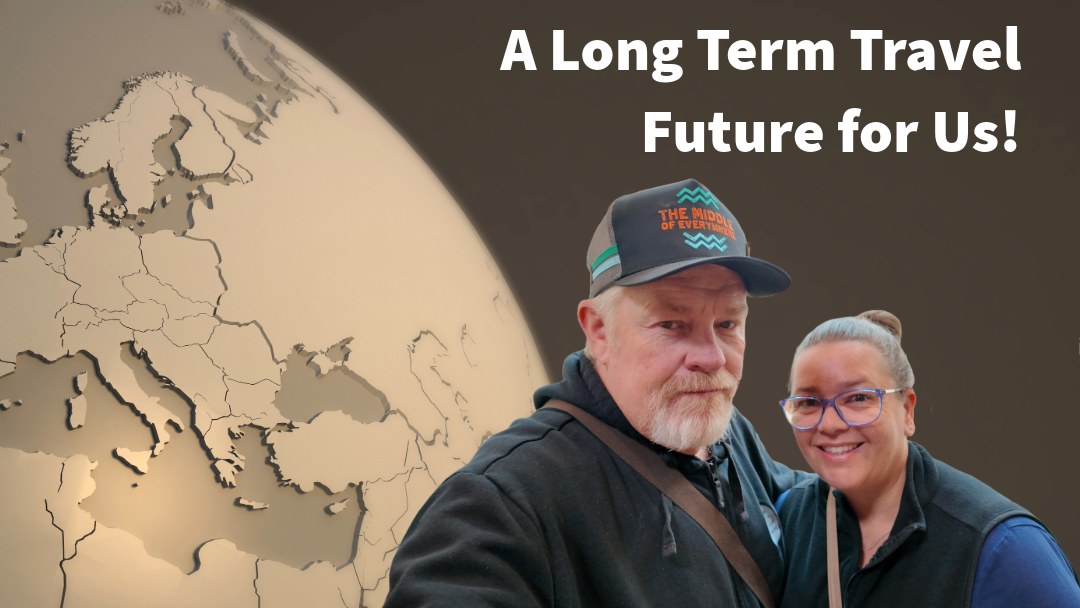
Bec and I have been talking about this for years. Long term travel. Not a month away like we usually do. Properly hitting the road as a couple in our late 40’s and early 50s with no return date.
Back in 2019 we took our two daughters out of school and did 14 months of travel as a family through Asia and Europe. It seems like a lifetime ago now. Our kids have since both become adults and are starting their own lives. Which means Bec and I are free to do this again. Just the two of us this time.
We have a plan that includes two phases of long term travel that are completely different from each other. Let me explain what and how we are going to do it.
Why we’re doing this now
If you’re sitting there wondering whether long term travel is possible at our age, it is. We’re proof that it doesn’t have to be a gap year thing you do in your 20s. We did it with kids. We’re about to do it again without them.

The truth is we’ve been working towards this for years. Saving where we can. Building income online through blogging and content creation so that when the time is right we can just go. For couples over 50 who think this kind of travel is out of reach, it’s not. It just takes planning and a willingness to live differently for a while.
We’ve been to over 45 countries in the last 26 years. But most of that has been in short bursts. A week here, two weeks there. This time we want to go deeper. Stay longer. Actually live somewhere instead of just passing through.
Phase 1: Fast long term travel
Phase one is what I’m calling fast long term travel. We’ll head off next year for around 12 months. During this time there will be a mix of short stops of a week or less and some longer stops of three to four weeks. We’re treating this as a chance to see places we haven’t been, more as tourists than long term travellers.
Bec has always wanted to go to Greece. Somehow over 26 years of travel and 45 plus countries we have never made it there. That changes on this trip.
For me I want to see Uzbekistan, Peru and Bolivia. Turkey, Georgia and Armenia are on the list too. These are all countries we haven’t visited before. In a way they’ll serve as a test. Can we see ourselves spending longer in any of these places when we start phase two.
For this first 12 months I’ll take leave from my job. That’s the key bit. It means we can come home after a year and I can go back to work. Refill the bank account. Get everything sorted before we properly quit and hit the road with no return date.
What we learned from 14 months on the road in 2019
Our 2019 trip taught us a lot. Travelling with kids is a completely different experience to travelling as a couple. The pace is different. the budget is different. and dealing with kids is time consuming, but rewarding
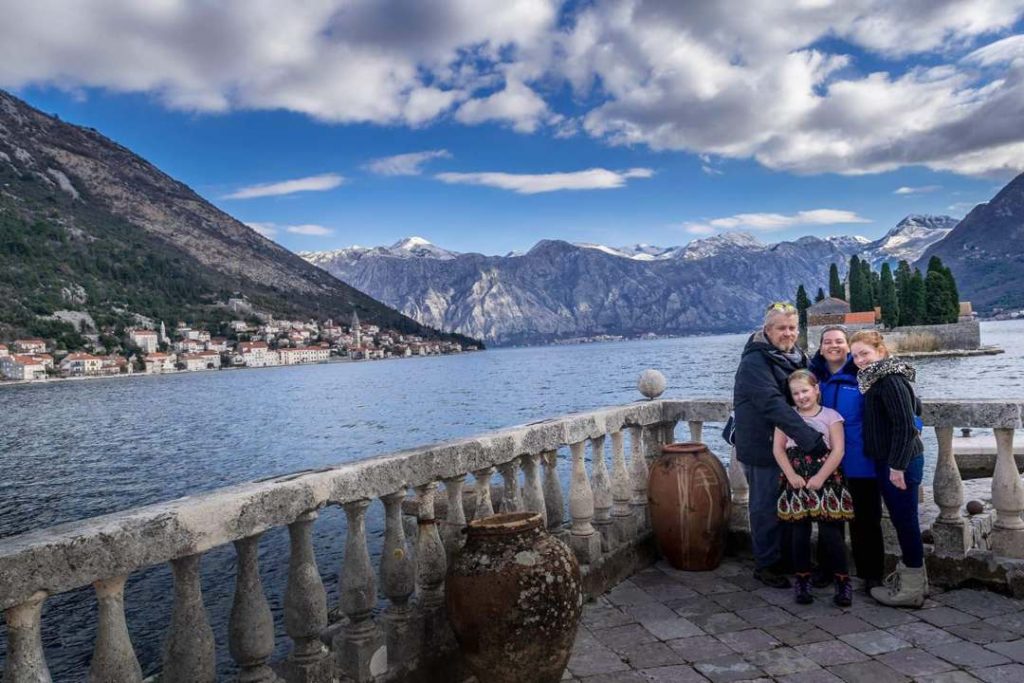
We learned that three to four weeks in one place is the sweet spot for us. Long enough to settle in but not so long that you get bored.
We also learned that Southeast Asia is where our money goes furthest. That trip confirmed what we already suspected. If you want to travel long term on a budget, Asia is going to be our best option, plus it is close to Australia if we have make a quick trip back for any reason.
If you’re thinking about long term travel, do a trial run first. Take three or four weeks somewhere and see how you go. It’s very different to a two week holiday and not everyone enjoys it. Better to find out before you quit your job.
Phase 2: Slow long term travel
Phase two is the one we’re really building towards. This is the classic slow travel approach. Pick a place, stay there for months, live there and get to know it properly. Not just passing through as tourists. Actually living in a place, learning the rhythms of it, finding the local spots, becoming a regular somewhere.

The budget for phase two will be tighter than phase one. That’s just the reality. We won’t have my salary coming in. So we need to be smart about where we go.
We’ll pick places where the cost of living is low. Most likely in Asia where we already know the ground. Places like Sanur in Bali, Ho Chi Minh City in Vietnam, Phnom Penh in Cambodia and even parts of China all represent great value. A comfortable apartment, good food and a decent lifestyle for a fraction of what it costs in Australia.
We’ll most likely start somewhere we’ve been before. Somewhere we already know works for us. Then branch out from there. Sanur is most likely that destination
How we plan to fund long term travel
This is the question everyone asks. How do you pay for it.
Phase one is straightforward. I take leave from work. We use our savings. We come home after 12 months, I go back to work and we rebuild before phase two.
Phase two is where the planning matters. We plan to fund our slow long term travel through a few income streams. Interest from term deposits is the base. On top of that we earn money from YouTube, Mediavine ad revenue and affiliate sales across a few websites we run. None of these on their own would be enough. Together they add up to a workable monthly income, especially when you’re living somewhere cheap.
The key is keeping costs low. If your monthly expenses in Bali or Vietnam are $2,000 to $3,000 Australian for two people, you don’t need a massive income to make it work. You just need consistency.
How we’ll handle visas
We’re not going to overthink this. Most countries in Southeast Asia offer tourist visas of 30 to 90 days. We’ll stay as long as the visa allows then move on. If we want to stay longer in a country we’ll do a visa run to a neighbouring country, spend a few days there and come back with a fresh visa. It’s a well known approach that plenty of long term travellers use.
Some countries offer longer term visas if you apply in advance. We’ll look into those where it makes sense. But for the most part, working around tourist visa limits is the simplest and most flexible approach for the type of travel we’re doing.
Travel insurance for long term travel
We’ll take out long term travel insurance but most likely medical cover only to keep costs down. Full comprehensive insurance for 12 months is expensive. Medical only covers the thing that actually matters, which is getting sick or injured overseas and needing hospital treatment.
At our age this is not optional. Medical costs in some countries can wipe you out if something serious happens and you’re not covered by travel insurance. We learned that on a previous trip when a medical emergency in Thailand reminded us why insurance exists. Just get covered. The cost is nothing compared to the alternative.
What happens to our house in Australia
Our house stays. We’re not selling it. At our age we’re too old to sell up and have to start again from scratch when we come back. The house gives us a safety net. If something goes wrong, if we get homesick, if one of the kids needs us, we can come home at any time and walk straight back into our own place.
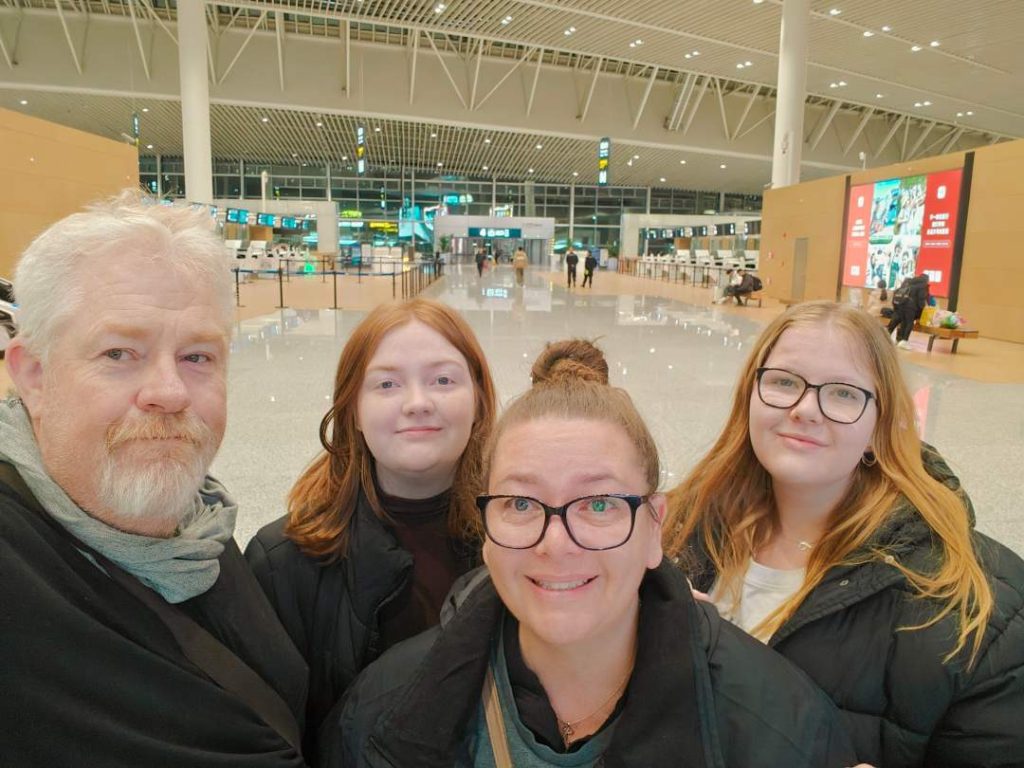
One of our kids might live in it while we’re away. If not, we’ll have family come and check on it regularly. We won’t rent it out because we want the flexibility to come home whenever we need to.
We plan to fly back to Australia at least once a year to see the kids. Maybe more if they get married or have kids of their own. That’s the deal. Travel doesn’t mean cutting ties.
The emotional side of long term travel over 50
Nobody talks about this bit but it’s real. Leaving your adult kids behind is harder than you think. Even when they’re grown up and independent, you still worry. Will they be ok? What if something happens and we’re on the other side of the world?
Bec feels this more than I do. She’s the one who worries about being away from the girls. I think of it as us finally doing the thing we always said we would. But I’d be lying if I said it didn’t cross my mind too.
The house sitting empty is another one. We’ve put 20 years into that place. Walking away from it, even temporarily, feels strange. But it’ll be there when we get back. That’s the whole point of keeping it.
Is long term travel for everyone?
No. And that’s ok. Some people love the idea of it but wouldn’t enjoy the reality. Living out of a suitcase gets old. You miss your own bed. You miss your routine. Not every relationship handles 24/7 together in unfamiliar places.
Our 14 months in 2019 proved to us that we can do it. We came home closer as a family, not further apart. That gives us confidence going into this next chapter as a couple.
If you’re thinking about it, start small. Do a month somewhere. See how you go. If you love it, plan for longer. If you don’t, at least you know.
We’ve been giving straight-up travel advice for midlife couples for over 26 years. Take a look at the story behind Street Eats & Window Seats. And for more on how we approach travel, head to our destinations guide.
Can you do long term travel in your 50s?
Yes. We did 14 months as a family in 2019 and are planning two more phases of long term travel as a couple. It takes more planning than it does in your 20s — you need to think about health insurance, your house, income and staying connected with family — but it is absolutely possible.
How do you fund long term travel as a couple?
We use a mix of term deposit interest, YouTube income, Mediavine ad revenue and affiliate sales across our websites. For phase one we also have savings and I’m taking leave from work. The key is keeping your monthly costs low by choosing destinations where the cost of living works in your favour.
What is the difference between fast and slow long term travel?
Fast long term travel means moving regularly — a week here, a month there — seeing lots of places as a tourist. Slow long term travel means picking one place and staying for months, living there rather than passing through. Both have their appeal and we plan to do both.
Where is the cheapest place to live as a long term traveller?
Southeast Asia is hard to beat. Places like Sanur in Bali, Ho Chi Minh City in Vietnam and Kuala Lumpur in Malaysia offer a comfortable lifestyle for a fraction of what it costs in Australia. Monthly costs of $2,000 to $3,000 Australian for two people are realistic in these locations.
How do you handle visas for long term travel?
Most Southeast Asian countries offer tourist visas of 30 to 90 days. We plan to stay as long as the visa allows then either move on or do a visa run to a neighbouring country and come back with a fresh visa. It is a well known approach used by many long term travellers.
What travel insurance do you need for long term travel?
We take out long term travel insurance with medical cover only to keep costs down. Full comprehensive insurance for 12 months is expensive. Medical only covers the thing that actually matters — getting sick or injured overseas. At our age this is not optional.
Should you sell your house before long term travel?
We are not selling ours. At our age starting again from scratch is not realistic. Keeping the house gives us a safety net — we can come home at any time. One of our kids may live in it while we are away, otherwise family will check on it. We also plan to fly home at least once a year to see the kids.