
Short answer: Yes, the Saily eSIM worked from the moment we landed in Bali. We paid $13.99 USD (about $20 AUD) for 5 GB valid for 30 days, installed it at Kuala Lumpur airport, and it covered five days of Grab, YouTube and TikTok. For a stay of a month or more, or if you use a lot of data, a local SIM is usually cheaper.
This post contains affiliate links. If you buy through them we may earn a commission at no extra cost to you.
I’ve always prided myself on being reasonably tech savvy. I love new technology, especially anything that makes travel easier. But keeping up with travel tech when you’re in your 40s and 50s can be genuinely overwhelming. Things change fast and you don’t always know what’s worth trying and what’s just hype.
One thing I had never tried was an eSIM for travel. For some reason I just didn’t trust them. I’d seen people complain about eSIM problems while travelling, slow speeds, poor customer service, eSIMs not working when they landed.
The last thing Bec and I need after a long flight is to arrive somewhere and find out we have no data. My brain is fried enough after 11 hours in the air without having to wander around an airport trying to figure out why my phone isn’t connecting.
So up till now I’ve shown my age and stuck with hard SIMs. We’ve been doing it the same way for years. Jump on eBay before a trip, buy a travel SIM for around $20 to $30 AUD, get about 10 GB of data for 30 days, done. Combine that with free Wi-Fi at the hotel and it’s always been plenty. We even have those little SIM tray pins attached to our backpack on a keyring at all times.
eSIM vs SIM card for travel — why I finally tried it
We had five days coming up in Bali, Indonesia. Short trip, low stakes. If the eSIM for Bali didn’t work I knew I could easily find somewhere to buy a hard SIM. It seemed like the perfect chance to finally find out whether you can trust eSIM for travel or whether the sceptics were right. As a midlife travel couple, the last thing we want is to be fussing around with connectivity after a long haul flight.

So I jumped on Google and searched for the best eSIM for Bali Indonesia travel. Airalo, Saily, Holafly, Klook and a few others all came up. I’d heard of Airalo and Saily before from Facebook travel groups so I focused on those two.
Saily vs Airalo vs a local SIM in Bali
| Option | Data | Validity | Price | Best for |
|---|---|---|---|---|
| Saily eSIM | 5 GB | 30 days | $13.99 USD (about $20 AUD) | Short trips |
| Airalo eSIM | 5 GB | 15 days | $20 AUD | Short trips |
| Local SIM in Bali | 20–25 GB | Varies | About $20 AUD | A month or heavy use |
Saily and Airalo were pretty much the same price. I’d had a friend personally recommend Saily so I went with that. For a five day trip to Bali, 5 GB was plenty. More on that below.
How to use an eSIM for the first time overseas — step by step
This is where I thought it might get complicated. It didn’t. First, make sure your phone supports eSIM. Not all do, so check before you buy.
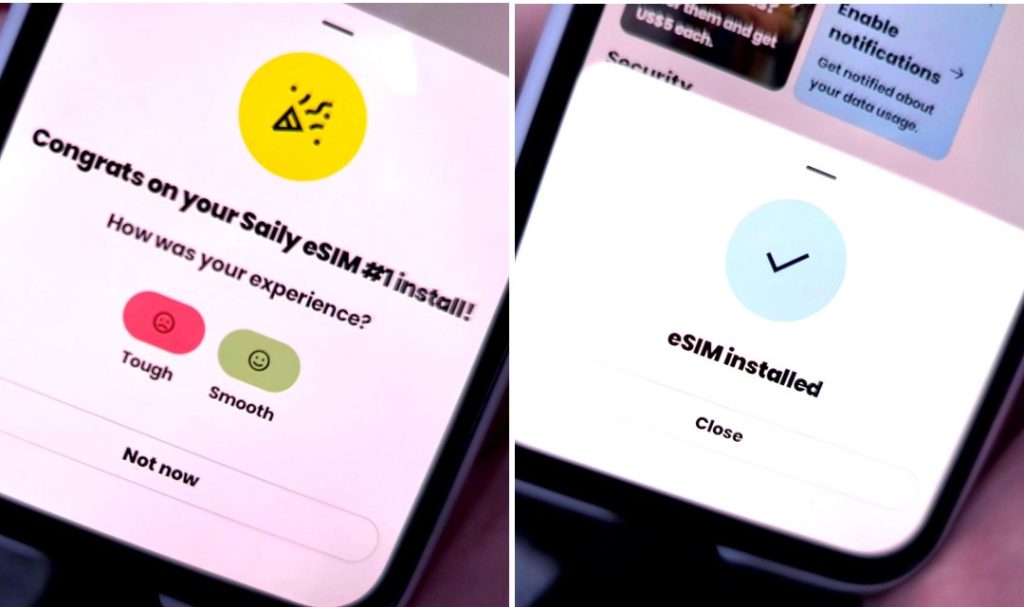
Then the process for how to set up an eSIM abroad was straightforward. Download the Saily app, sign up with your email, search Indonesia, pick your plan, pay by credit card, tap install and let it do its thing. The eSIM showed up in my phone settings under Mobile Plans alongside my Australian SIM. I set it up sitting in the airport in Kuala Lumpur Malaysia on the way to Bali.
- Download the Saily app from the App Store or Google Play
- Sign up with your email and password
- Search your destination — I typed in Indonesia
- Pick your plan based on how much data you need for travel
- Pay by credit card
- Tap install and let the app do its thing
- In your phone settings under Mobile Plans, switch to Saily when you land
Install the eSIM before you leave home but do not activate it until you land. Installing and activating are two different steps. There is no risk of using up your data early.
One thing that tripped me up briefly was data roaming. You have to toggle it on for the eSIM to work, which felt counterintuitive because we’re always told to turn off data roaming overseas to avoid massive bills on your home plan. With an eSIM it works differently. Once I contacted Saily’s customer support through the app, they walked me through it immediately. Really good customer service, kept checking back to make sure everything was working.
Did the Saily eSIM work as soon as we landed in Bali?
Yes. This was the part that i was really happy about. From the moment I landed in Bali and switched over to the Saily eSIM, it worked. I could book a Grab straight from the airport without hunting for a SIM kiosk, filling in passport details or fending off airport sales people. No lining up, no drama. That right there is worth the price of the eSIM for travel alone.
How well did Saily work in Bali?
Coverage in Bali was good. There were occasional moments where it dropped but a quick toggle of flight mode reset the connection every time. That’s the easiest fix if your eSIM is not working while travelling. YouTube streamed fine, TikTok loaded, videos uploaded to Google Photos automatically.
The only thing I noticed was that it chewed through data a bit faster than expected. For five days I went with 5 GB which was enough. If you are a heavy data user travelling for longer, you might want more.
eSIM vs local SIM in Bali — price comparison
This is where the hard SIM still wins for longer trips. Getting 20 to 25 GB from a local SIM in Bali costs around the same as 5 GB on an eSIM. If you’re staying for a month or you’re a heavy user, a local hard SIM is going to be cheaper. There’s a bloke called Andy Awesome on Facebook who’ll come to your hotel in Bali, put a hard SIM in and set you up for about $20. Hard to beat for longer stays.
But for short trips where the easiest way to get data when travelling overseas matters more than the cheapest, the eSIM wins comfortably.
Is eSIM worth it for older travellers?
I was really sceptical going in. I’m in my early 50s and while I consider myself pretty good with technology, the eSIM felt like something I might stuff up. I didn’t. The app is straightforward and if you do get stuck the customer support is there to walk you through it. If you can set up a new app on your phone you can set up an eSIM.
For couples travelling after 50, the convenience of landing somewhere and having mobile data working straight away with no queuing, no fuss is a real relief. You just want things to work. I’m a convert. I’ll be using one on every short trip from here.
We’ve been giving straight-up travel advice for midlife couples for over 26 years. Take a look at the story behind Street Eats & Window Seats. And for more on travelling in Bali, head to our Indonesia guide.
How do you use an eSIM for the first time overseas?
Download the eSIM provider app before you leave home, sign up, pick your destination and data plan, pay and install. The eSIM will appear in your phone settings under Mobile Plans alongside your regular SIM. When you land, switch to the eSIM and toggle on data roaming. The whole setup takes around ten minutes and can be done before you even board the plane.
Is eSIM better than a SIM card for travel?
It depends on the length of your trip. For short trips of a week or less, eSIM wins on convenience. You get data working the moment you land without queuing at a kiosk or swapping out a physical SIM. For longer trips or heavy data users, a local hard SIM is usually cheaper for the same amount of data.
What is the best eSIM for Bali Indonesia travel?
We used Saily for our Bali trip and found it reliable and easy to set up. Airalo is the other most commonly recommended option. Both offer 5 GB plans for around $20 AUD. Saily gave us 30 days vs Airalo’s 15 days at the same price point, which made it the better value for us.
Does Saily work in Bali?
Yes. From the moment we landed in Bali and switched to the Saily eSIM it worked. We booked a Grab straight from the airport with no SIM kiosk, no passport forms and no queue. Coverage was good, with the occasional drop that a quick flight mode toggle fixed every time. The one thing to know is that you need to switch data roaming on for the eSIM to work.
Does eSIM work immediately after landing?
Yes, if you have set it up and installed it before you land. Once the plane touches down you switch to the eSIM in your phone settings, toggle on data roaming and you are connected. No airport kiosks, no SIM swapping, no waiting. This is the biggest advantage of eSIM for travel.
What do you do if your eSIM doesn’t work when you land?
First, try toggling flight mode on and off to reset the connection. If that doesn’t work, check that data roaming is switched on for the eSIM in your phone settings. Still not working, get onto the provider’s customer support through the app. Saily’s support team was excellent and walked us through the fix within minutes.
How much data do you need for a travel eSIM?
For a short trip of five to seven days with normal use including maps, social media, messaging and occasional streaming, 5 GB is comfortable. If you are streaming video heavily or uploading content regularly you may want 10 GB. For trips longer than two weeks a local hard SIM will likely be cheaper for the amount of data you need.
Is eSIM good for older travellers?
Yes. The setup is straightforward and if you can download an app and follow simple instructions you can set up an eSIM. The biggest benefit for couples travelling after 50 is not having to deal with airport SIM kiosks after a long flight. If you do get stuck the customer support from providers like Saily is genuinely helpful.
Is eSIM cheaper than buying a local SIM in Bali?
Not for longer stays. A local hard SIM in Bali gives you around 20 to 25 GB for roughly the same price as 5 GB on an eSIM. For a short trip the convenience of eSIM outweighs the cost difference. For a longer stay the local SIM is better value.
Should I install the eSIM before I leave home? Will it activate early?
Yes, install it before you leave home but do not activate it until you land. Installing and activating are two different steps. Installing just downloads the eSIM profile to your phone. It will not use any data or start your plan. You activate it by switching to it in your phone settings when you arrive at your destination. There is no risk of it activating early and eating into your data while you are still at home.
Can I use my home SIM for calls and the eSIM for data at the same time?
Yes, if your phone supports dual SIM. Set your home SIM as the default for calls and SMS and the eSIM as the default for mobile data. Both run simultaneously. This means you can still receive calls on your home number while using the eSIM for data overseas. That is exactly how we had it set up in Bali and it worked perfectly.
If my phone is dual SIM, can I still receive SMS two-factor authentication codes on my home number?
Yes. As long as your home SIM is set as your default for calls and SMS, two-factor authentication codes will still come through to your regular number as normal. This is one of the biggest practical advantages of eSIM over physically swapping SIMs. You keep your home number active for banking and account security codes while using the eSIM for data. No need to worry about being locked out of accounts while travelling.