
Philippines travel guide for couples — Manila, Palawan, Boracay, Siargao and beyond. Street Eats and Window Seats covers honest travel advice, food experiences and practical tips for midlife travellers visiting the Philippines, including island hopping, transport and visa information.
Philippines
7,000 islands, warm people and a city that never stops moving
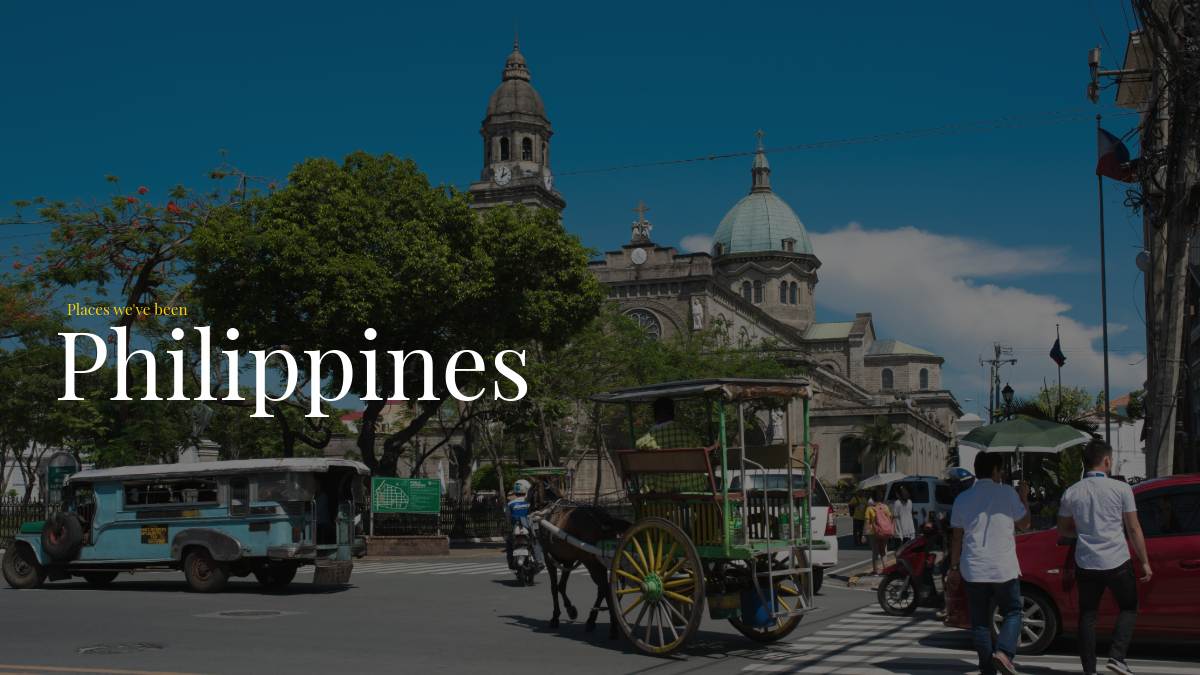
The Philippines is a destination that we have only briefly visited, having spent a few days in Manila on a trip back from China. Manila is at best chaotic, loud and home to some of the worst traffic in the world — but it is a fascinating city. Intramuros, the walled city built by the Spanish in the 1500s, sits just a short distance from modern shopping malls and rooftop bars.
Most people visit the Philippines for the islands — and there are over 7,000 of them. Some of the most popular are Boracay (famous for White Beach), Palawan (known for El Nido’s lagoons), and Siargao. These places are high on our list for when we visit again. For couples travelling after 40 or after 50 looking for realistic travel advice on the Philippines, this page collects everything we’ve written so far — with more to come as we return and explore further.
Most nationalities can enter the Philippines visa-free for 30 days, extendable to 59 days through the Bureau of Immigration. You’ll need a passport valid for at least 6 months and proof of onward travel. You need to complete the eTravel online registration within 72 hours before arrival. Extensions can be arranged easily at any Bureau of Immigration office.
The Philippine Peso (PHP) is the official currency. Cash is still widely used, particularly outside Manila and major tourist areas. ATMs are available everywhere in cities and tourist areas. Credit cards are accepted in larger hotels, malls and restaurants. The Philippines is not the cheapest country in Asia to visit.
Mobile coverage in cities and popular tourist areas is good. Pick up a local SIM card from Globe or Smart at the airport — both offer affordable tourist data packages. Some couples like us prefer to be connected before you arrive — you can install a Saily eSIM before leaving home. Mobile coverage can be patchy on more remote islands.
Between islands, domestic flights are the most practical option — Cebu Pacific, Air Asia and Philippine Airlines connect major destinations affordably. Book through Trip.com for your domestic flights. Within Manila, Grab is the easiest and safest way to get around. Jeepneys are a cultural icon but can be confusing for first timers. Ferries connect many islands and are a scenic, affordable option.
November to May is the dry season and the best time to visit most of the Philippines. June to October brings typhoon season with heavy rain and the possibility of big storms, particularly in the north. The south (Mindanao, Palawan) tends to have a more stable climate year-round. One thing you can’t control is the weather.
English is widely spoken which makes the Philippines one of the most accessible countries in Asia for first-time visitors. Filipinos are incredibly hospitable — embrace it. Bargaining is common in markets but always do it respectfully. Tipping is appreciated but not mandatory. When visiting churches or religious sites, dress modestly and be respectful. The Philippines is a predominantly Christian nation.